Kwekerreportage: Bremmer Boomkwekerijen
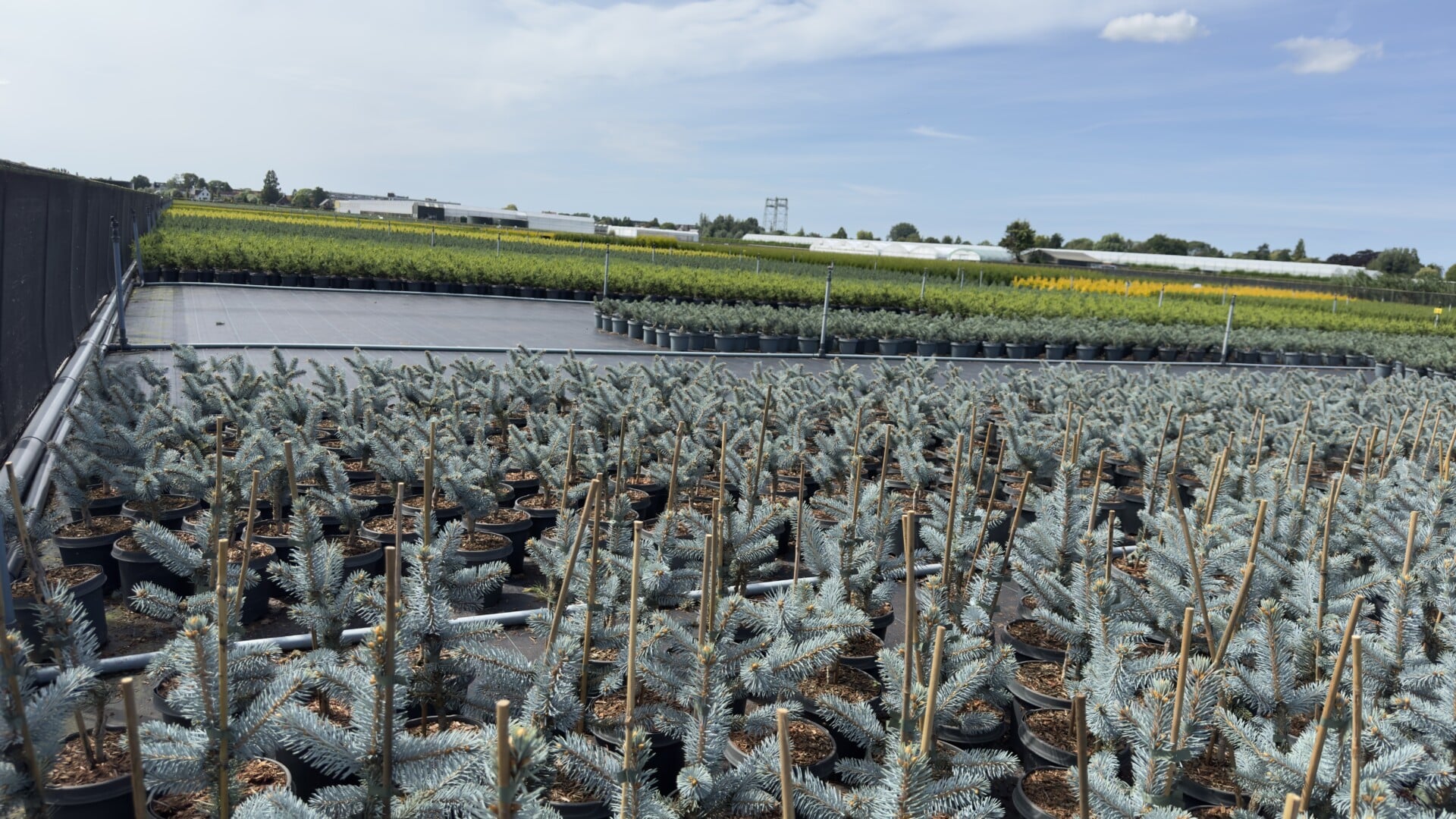
That grower is Paul Bremmer. I’ll try to capture his passion for conifers in words.
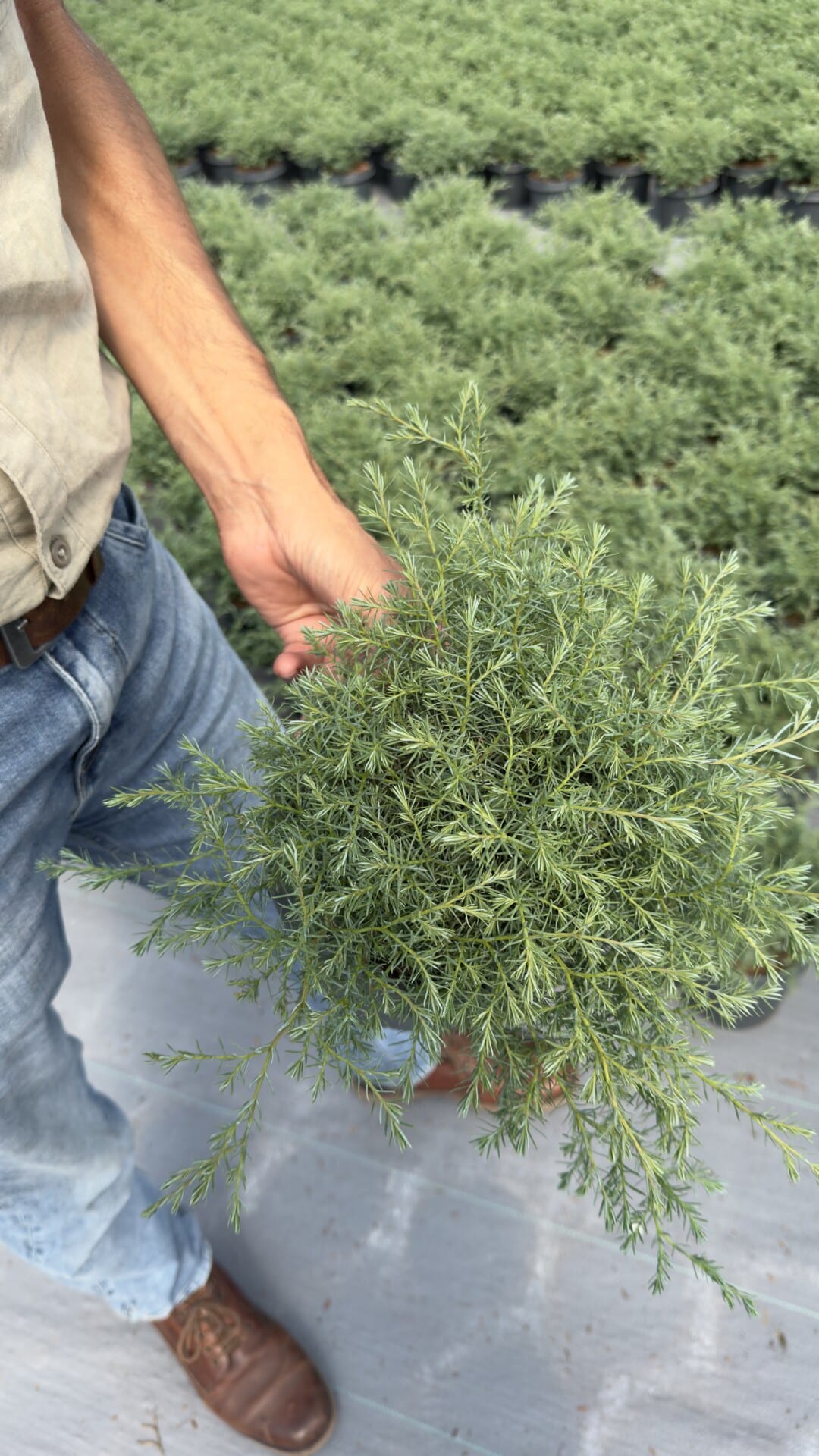
Before we’ve even properly started our tour, I’m already standing with a blue-grey conifer in my hands.
Look, this is a Chamaecyparis pisifera ‘Squarrosa’. I saved this variety from extinction. There were only ten plants left in the Netherlands. I bought them and started propagating from cuttings. By now it has become well-known and loved in the market, especially at Christmas, because of its beautiful blue colour.
How did you develop such a passion for and knowledge about conifers?
How does Bremmer Nurseries distinguish itself from other conifer growers?
First of all, we’re easy to recognise by the shape of our growing pots. We designed the black pots with a wide, flared rim ourselves. The rim makes it easy to lift the plants, and there’s a notch in it for the plant label, which clicks securely into place once we insert it.
What also sets us apart is the breadth of our range – we have many specials. And, of course, the quality. Whether it’s a Taxus baccata grown in large numbers or a special Cedrus, every plant is grown with care.
All our plants, except for one slow-growing pine, are grown in pots. That means they don’t need to be dug from the open ground – a process plants always need to recover from. Instead, they can be traded all year round with their root system intact.
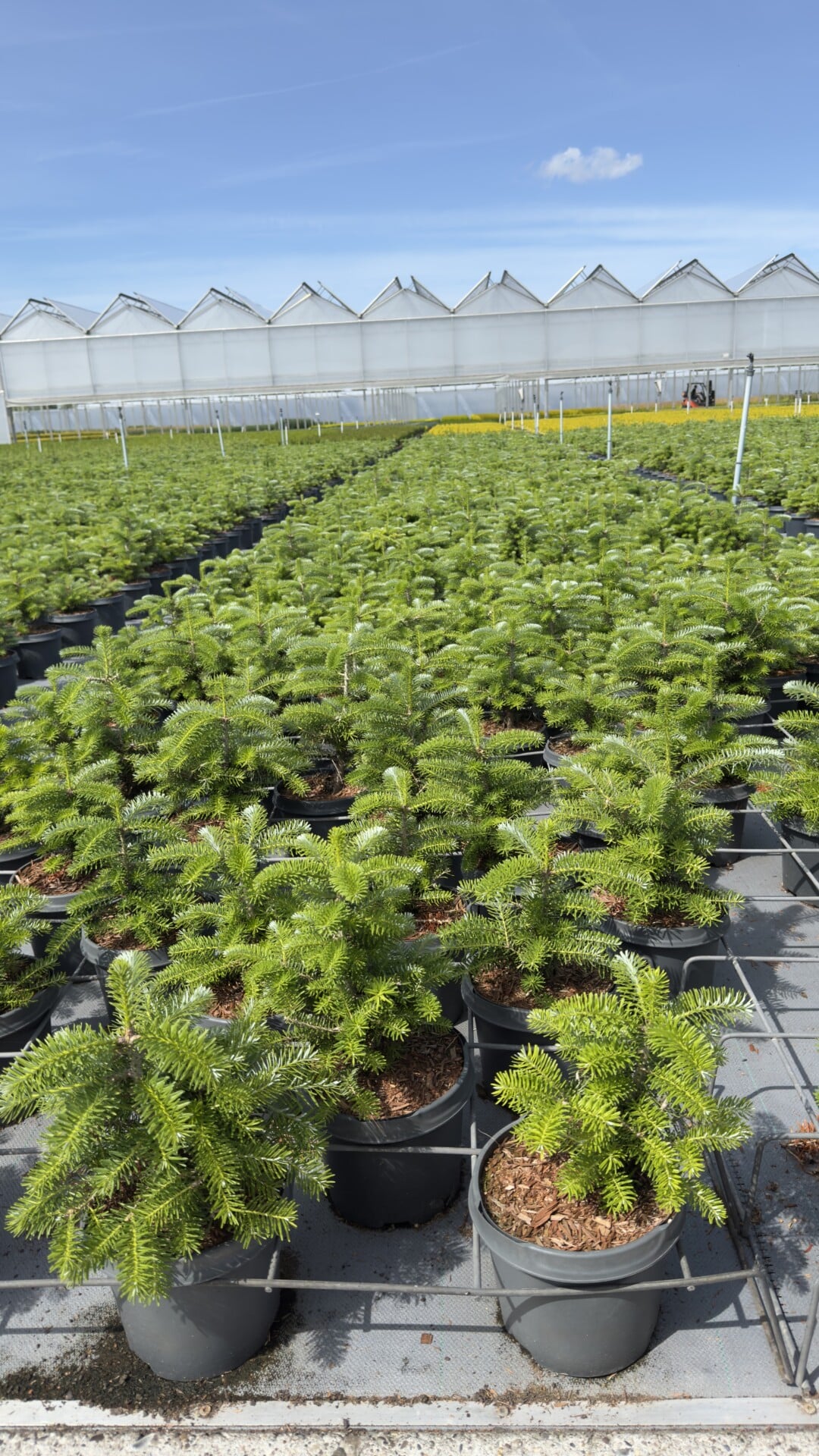
Conifers are green year-round and therefore always a solid basis for a garden centre’s outdoor section. As with most garden plants, our peak is in spring. In summer, we sell many hedge conifers. That’s because growers who sell them with a root ball stop doing so from late spring onwards, due to quality reasons. Towards Christmas, conifers really add to the atmosphere, so that’s another important season.
As we drive the golf cart through the rows full of plants, we stop at each variety that has a good story behind it. I can’t possibly share them all, but the one about Taxus baccata is too good to skip.
“The Taxus baccata is a magnificent tree that originally grew abundantly in this part of the world. England also had beautiful forests full of yew. Yew wood is extremely strong, tough and flexible. In the Middle Ages, the English discovered that longbows made from yew could shoot further than anyone else’s. This gave them a huge advantage on the battlefield and brought them great victories, such as the famous Battle of Agincourt. The trees were felled until no yew remained in England. They began importing yew wood from mainland Europe. Many old yew forests were cut down, and this once common tree became scarce throughout Europe. Let’s work together to change that!
Do you see any trends in the conifer world?
Every region has its own preferences. In Scandinavia, they focus on species that are extremely winter-hardy. In other parts of Europe, that is less important, and people mainly look at form and colour. In Eastern Europe, colour contrasts are especially important. In England, I see a slight preference for species suitable for topiary. And the demand for blue-grey colour has grown across the entire market.
What would you like to say to garden centres and consumers?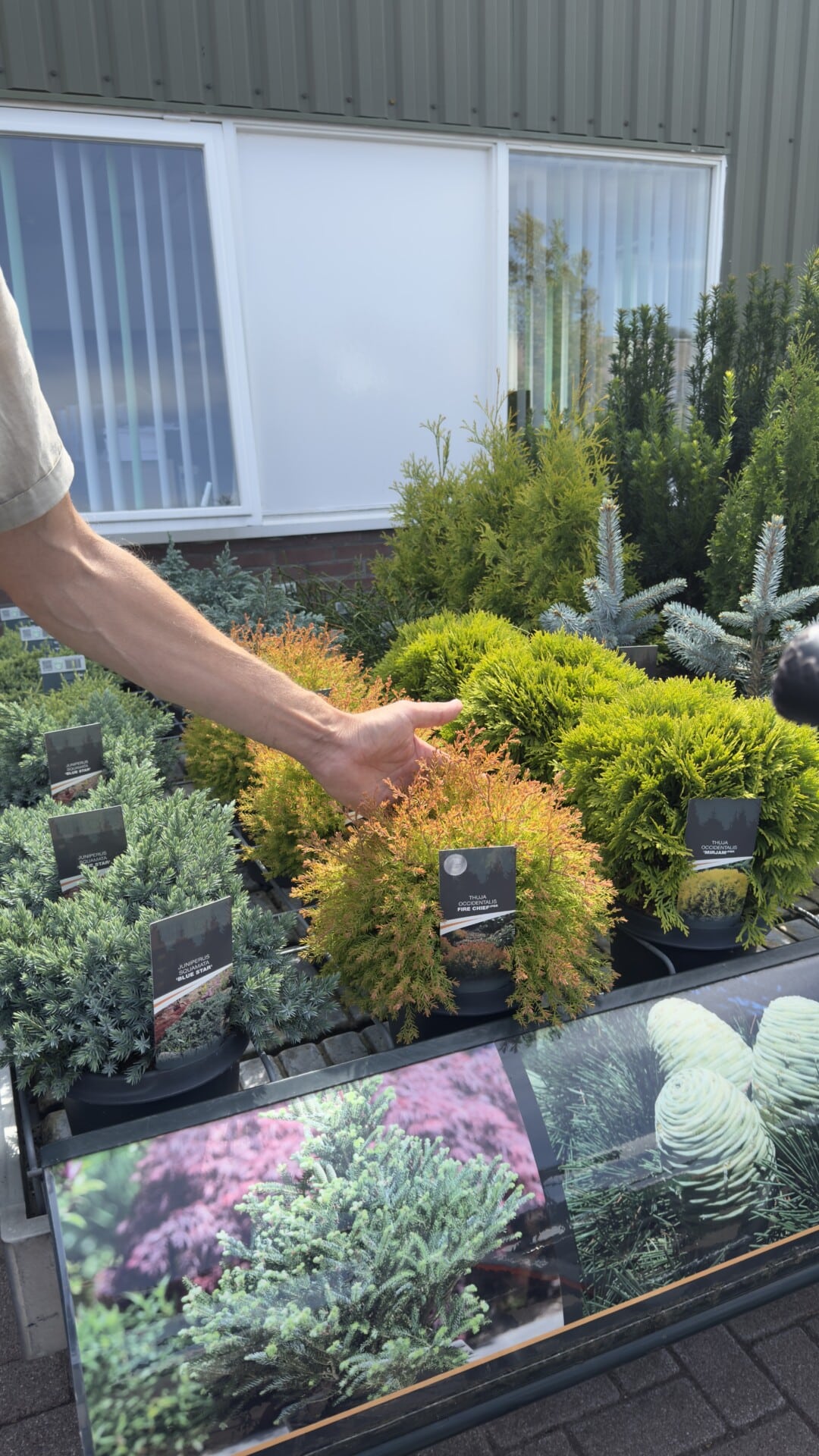
I wish more people appreciated conifers the way I do. They provide shelter for birds, hedgehogs and insects. They give year-round colour to the garden and are incredibly diverse. Let me list them: as a hedge, for topiary, as a rock garden plant, as a tree, as ground cover, and in a pot on the terrace. Add to that all the special shapes and colours, and you can see why an extensive range would be a welcome addition to any garden centre.
We end the tour next to the nursery. After making our way through the reeds, we arrive at a small lake.
The power of nature. We collect rainwater in our reservoir. In wet periods, any excess flows into this lake. The natural banks merge into a hedge of trees. This creates shelter for natural predators, such as parasitic wasps, ladybirds and predatory mites, which are more than welcome to do their useful work in our nursery.
Published on: 1 de Dezembro, 2025